Fredrikstad
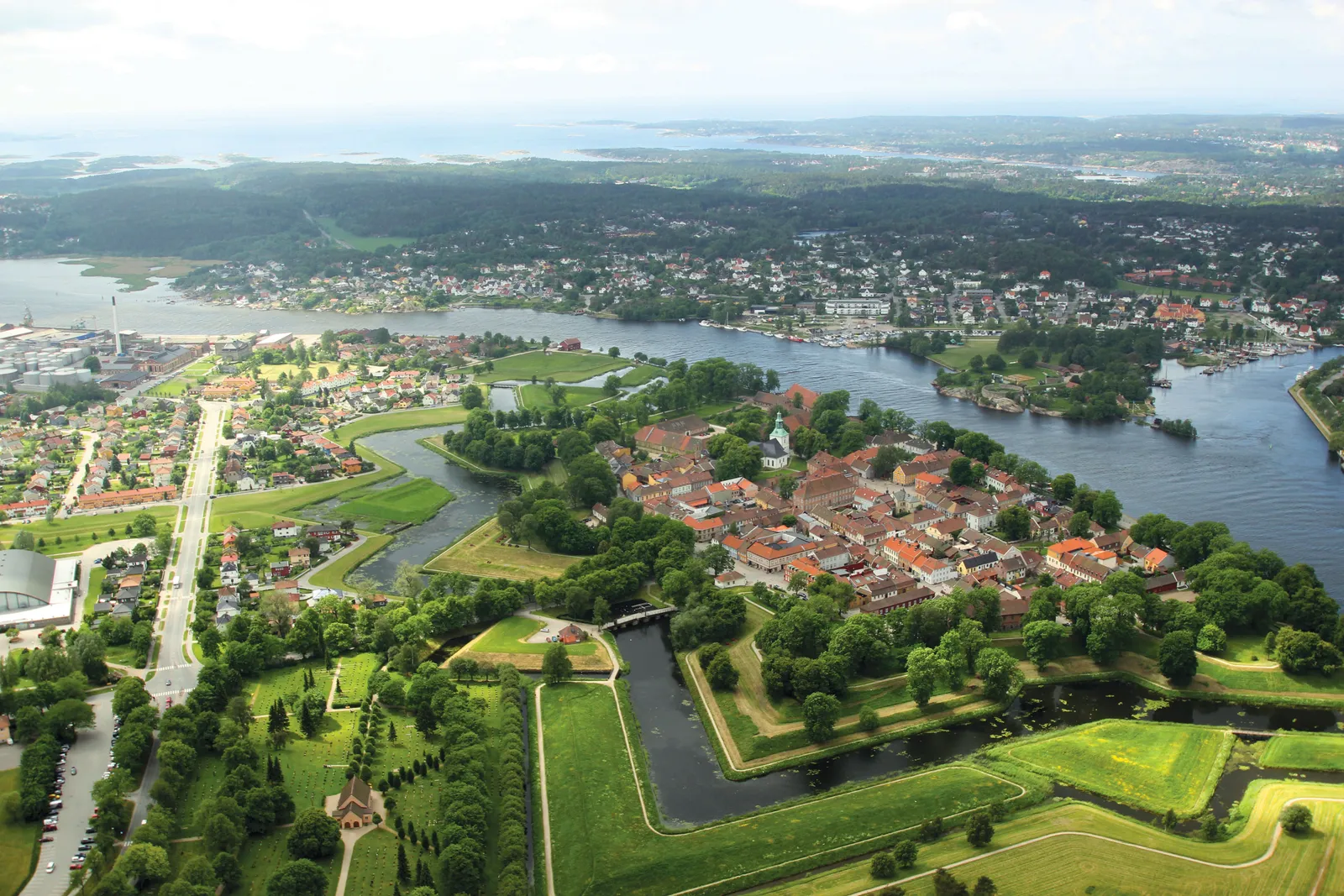
Photo: Xalzlos, CC BY-SA 4.0

Fredrikstad sits at the mouth of the Glomma, Norway’s longest river, in Østfold in the south-east of the country. It is Østfold’s most populous municipality, with around 86,000 inhabitants in 2026, and an easy hour by train from Oslo. The town was founded by royal decree in 1567, after Sarpsborg had been burned during the Nordic Seven Years’ War and its citizens wanted to rebuild at the river mouth.
What brings most visitors is Gamlebyen, the Old Town: a garrison town of small, regular Renaissance blocks and cobbled streets inside star-shaped ramparts, described by Store norske leksikon as the best-preserved fortress town in the Nordic countries. It is still a place where people live and work, not a museum. Beyond the town, the Hvaler archipelago and Norway’s first marine national park make Fredrikstad a good base for a summer by the sea.
Getting there
- Train from Oslo. Trains leave Oslo S mostly every hour, and every half hour in rush hour; the journey takes about an hour. Plan and book with Vy or Entur.
- Bus from Oslo. Vy’s VY6 express bus takes about 1 hour 20 minutes.
- From Oslo Airport Gardermoen. Vy’s airport bus (Flybussen) runs several times a day between the airport and Fredrikstad bus terminal, without changes. Check Vy for the current timetable.
- From Sandefjord Airport Torp, on the other side of the Oslofjord, drivers can cross on the Horten–Moss ferry. The crossing takes 30 minutes, and you pay only for the vehicle; passengers travel free.
- Moss Airport Rygge has had no scheduled flights since civilian operations ended on 1 November 2016.
Getting around
The centre and the Old Town face each other across the Glomma, linked by Fredrikstad Bridge (opened 1957, 824 metres long). The nicer way across is the city ferry (byferga). The ferries are run by the municipality, carry up to 50 passengers and are free, bikes included. There are three routes. The short Gamlebyferga crosses between Cicignon in the centre and Gamlebyen; a longer route runs from Gamlebyen via Smertu on Kråkerøy, the centre, Værste and Gressvik to Ålekilene, so a round trip doubles as a small river cruise; and a third crosses upriver between Sellebakk and Lisleby. The current timetables have no seasonal break: the Gamlebyferga runs from early morning to midnight (to 03:00 on Friday and Saturday nights), the other two from early morning to evening, with fewer departures at weekends. Check the municipality’s website for current times.
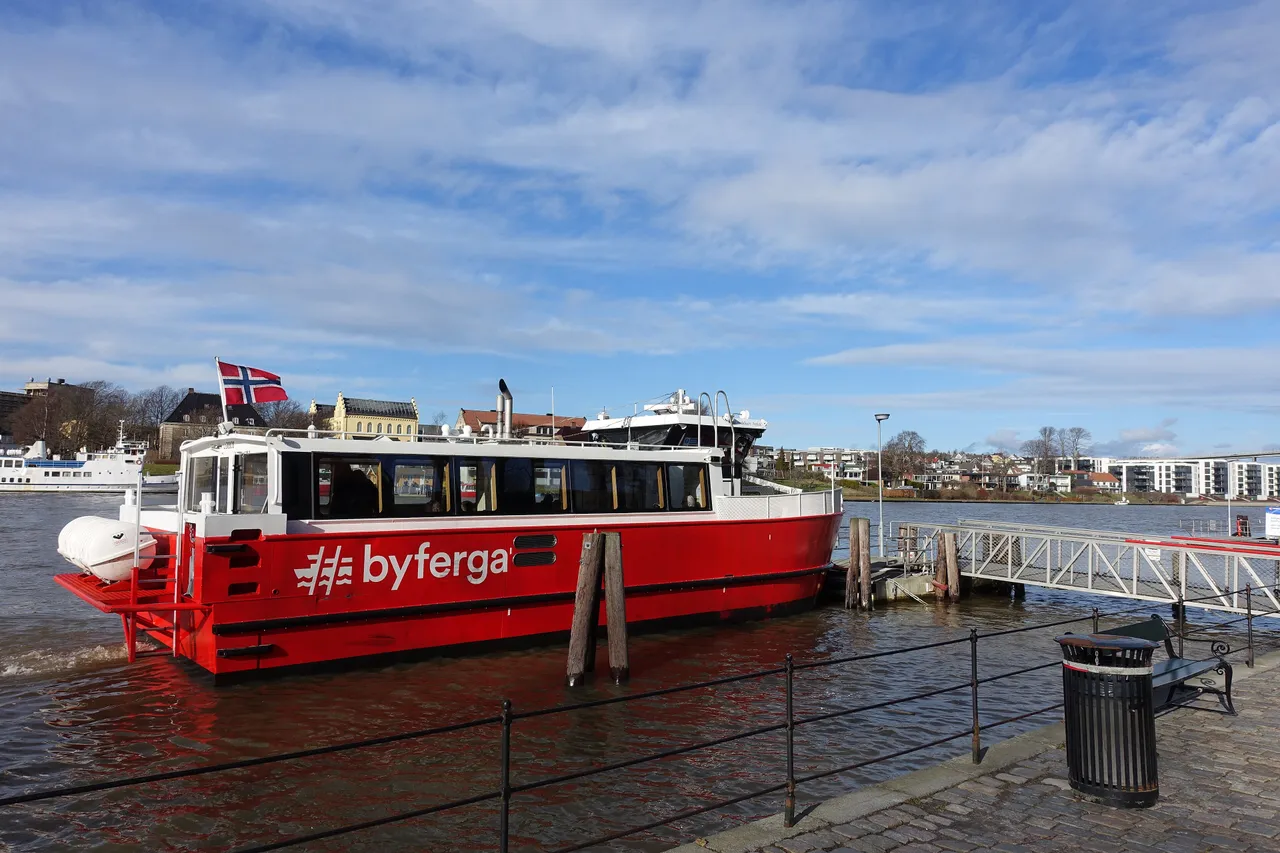
Photo: Ulflarsen, CC BY-SA 4.0

Local buses from Østfold kollektivtrafikk (ØKT) serve the town and run out to the Hvaler islands. Cycle paths are good, and the Glommastien path follows the river to Sarpsborg. For the bigger picture, see Getting around Norway.
When to go
Summer is the main season. Visit Norway notes that the islands of the outer Oslofjord get more sunshine than anywhere else in Norway, and according to Store norske leksikon the population of Hvaler multiplies in the summer months, when its thousands of cabins fill up. The Old Town works all year: its shops are open all year, Sundays included, and there is a Christmas market on the weekends before Christmas. Note that the Hvaler ferry is free for cars only from mid-August to March.
Things to see and do
- Gamlebyen. Walk the ramparts and moats, follow the old streets to the square, and browse the galleries, craft shops and cafés. At Bastion 5, potters, painters, goldsmiths and glassblowers work in open studios. Kortevaren, dating from 1939, is the oldest shop. Fredrikstad Museum’s collections are in the Old Town too.
- Kongsten Fort. A small bastion fort on a hill just outside Gamlebyen, completed in 1685 to plans by Johan Caspar von Cicignon. It is about a 15-minute walk from the Old Town and is open to visitors all year. It has cannons and underground casemates, but is not wheelchair accessible.
- Isegran. The island in the river where the naval commander Tordenskiold had his base during the Great Northern War. Today it holds Fredrikstad’s maritime museum, a boat workshop and Håpets katedral, an art project whose roof is made from plastic fish crates collected from the coast.
- The riverfront. The promenade along the Glomma in the centre is lined with bars and restaurants. The square at Nygaardsplassen has vintage shops and flea markets.
- Swimming. Kongsten has outdoor pools with a diving tower and water slide, and Foten beach in Fredrikstad holds Blue Flag status.
Day trips
The Hvaler islands. The archipelago south of the town has hundreds of islands and skerries (Store norske leksikon counts over 550, Visit Norway 833). The main islands are linked to the mainland by road, including the 3.8 km Hvaler tunnel, opened in 1989. Skjærhalden on Kirkøy is the largest village, with the national park visitor centre, a harbour beach (Kroksand, with Blue Flag status) and a seasonal boat to Strømstad in Sweden. From there a marked coastal path loops about 11 km past Homlungen lighthouse and Storesand beach and back to Skjærhalden. Hvaler’s medieval stone church, probably built before 1100, is one of the oldest in Norway. The Hvaler ferry to the eastern islands is free for passengers all year and for cars from mid-August to March. Every trip must be booked in advance, except foot-passenger departures from Skjærhalden.
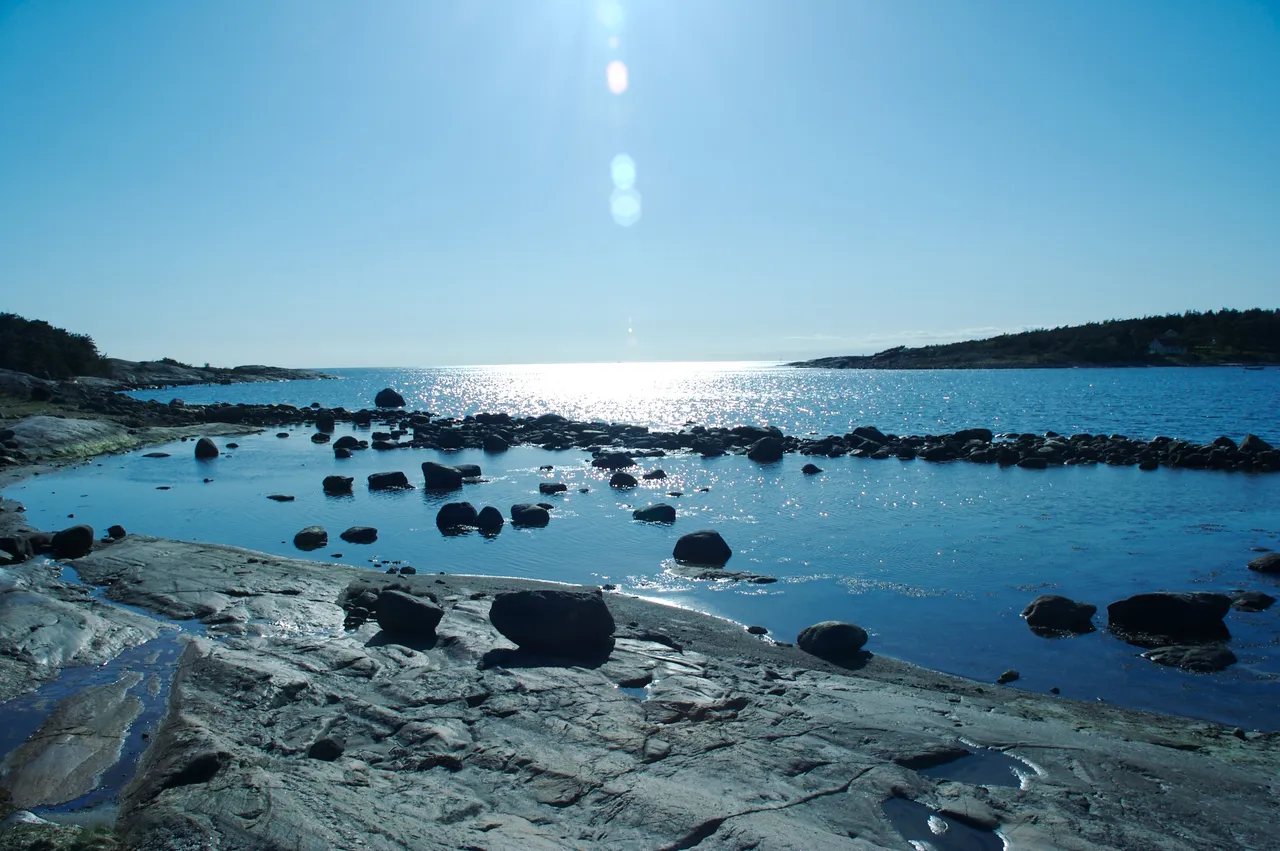
Photo: Anders Fagerjord, CC BY-SA 2.0

Ytre Hvaler National Park. Established in 2009, it covers 354 km² of coast and sea and borders Sweden’s Kosterhavet National Park. About 340 km² of the park is sea, so it is best explored by kayak, boat or on a dive. Start at the visitor centre in Skjærhalden.
Oldtidsveien and the Bronze Age. Between Fredrikstad and Sarpsborg, the Oldtidsruta route passes what Visit Fredrikstad & Hvaler calls Norway’s largest collection of heritage sites from the Bronze and Early Iron Ages. The ancient road crosses route 110 at Hunn, and the Hunnfeltet grave field is about six kilometres east of the town.
Where to stay
- The centre, along the riverfront, is the practical choice for a short stay: the main city hotels are here, and the ferry to Gamlebyen is a short crossing away.
- Gamlebyen has a small hotel inside the fortress town, for staying among the ramparts after the day visitors leave. Book early.
- Hvaler and the coast are for a slower summer stay: cabins, apartments, campsites and guest harbours. Visit Fredrikstad & Hvaler lists them all, including a lighthouse stay at Strømtangen (let from Easter to the end of October).
Good to know
- Shops on Sundays. Gamlebyen’s shops open on Sundays all year, unusual in Norway.
- Parking. Central Fredrikstad has paid zones and three parking garages that give two hours free each day.
- The national park has its own rules: since 1 January 2026 all fishing has been banned in a no-fishing zone covering part of the park. Check the park’s advice on access before you take a boat or kayak out.
- Combine with Oslo. Fredrikstad is an easy add-on to a stay in Oslo, as a day trip or a couple of nights.
Practical info
- Getting there
- About an hour by train from Oslo S, mostly hourly. Vy's airport bus runs direct from Oslo Airport Gardermoen several times a day.
- Season
- Summer for the coast and Hvaler; the Old Town is open all year, with a Christmas market on weekends before Christmas.
- Cost level
- moderate
- Booking tips
- Book summer accommodation on Hvaler and in Gamlebyen early. The city ferries are free; book Hvaler ferry trips in advance (foot passengers leaving Skjærhalden excepted).
Sources
- https://snl.no/Fredrikstad
- https://snl.no/Fredrikstad_bru
- https://snl.no/Hvaler
- https://snl.no/Ytre_Hvaler_nasjonalpark
- https://snl.no/Oldtidsveien
- https://snl.no/Fredrikstad_Museum
- https://snl.no/Hunn
- https://snl.no/Moss_lufthavn,_Rygge
- https://www.nrk.no/nyheter/moss-lufthavn-rygge-1.12866568
- https://lovdata.no/dokument/LF/forskrift/2009-06-26-883
- https://ytrehvaler.no/om-nasjonalparken/
- https://ytrehvaler.no/nye-fiskeregler-i-oslofjorden-dette-ma-du-som-fritidsfisker-vite/
- https://www.visitnorway.com/places-to-go/eastern-norway/fredrikstad/
- https://www.visitnorway.com/places-to-go/eastern-norway/fredrikstad/plan-your-trip/
- https://www.visitnorway.com/places-to-go/eastern-norway/fredrikstad/weekend-insider-tips/
- https://www.visitnorway.com/listings/the-old-town-gamlebyen-fredrikstad/23375/
- https://www.visitnorway.com/listings/basto-fosen/200085/
- https://www.visitfredrikstadhvaler.com/no/transport
- https://www.visitfredrikstadhvaler.com/no/transport/hvalerferga
- https://www.visitfredrikstadhvaler.com/no/kongsten-fort
- https://www.visitfredrikstadhvaler.com/en/articles/ten-tips
- https://www.visitfredrikstadhvaler.com/en/accommodation
- https://visitfredrikstadhvaler.com/en/the-hvaler-islands/hvaler--island-by-island/kirkoy
- https://visitfredrikstadhvaler.com/en/activity/isegran-the-peaceful-island
- https://www.visitfredrikstadhvaler.com/no/attraksjon/hapets-katedral-isegran?tlp=6156213
- https://visitfredrikstadhvaler.com/no/overnatting/stromtangen-fyr
- https://ut.no/turforslag/113955
- https://www.fredrikstad.kommune.no/tjenester/vei-sykkel-ferge/informasjon-om-byfergene/
- https://www.fredrikstad.kommune.no/tjenester/vei-sykkel-ferge/byfergene/
- https://www.fredrikstad.kommune.no/tjenester/vei-sykkel-ferge/rutetider-gamlebyen-aalekilen-til-utskrift/
- https://ostfold-kollektiv.no/reise/rutetabeller/ferge
- https://ostfold-kollektiv.no/reise/rutetabeller/buss/hvaler
- https://www.vy.no/buss/fredrikstad-gardermoen