Oslo
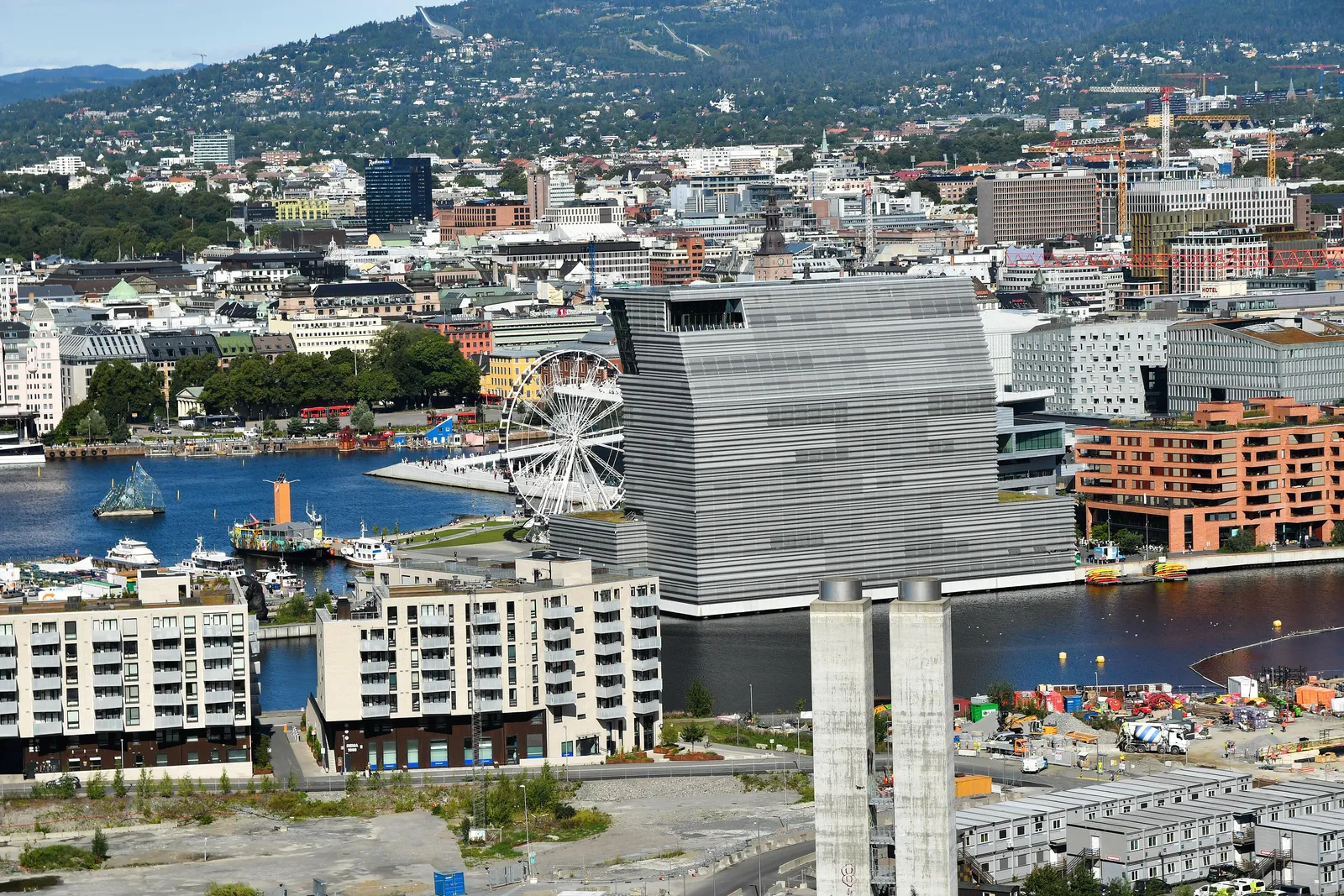
Photo: Helge Høifødt, CC BY-SA 4.0

Oslo sits at the very head of the Oslofjord, with the city centre between the two bays of Pipervika and Bjørvika. It has been Norway’s capital since 1814 and is home to the King, the government, the Storting and the Supreme Court. It is also the country’s largest municipality by population, with 729,437 residents in the second quarter of 2026.
For a capital it is unusually green. Only about a third of the 426 km² municipality is built up; the rest is mostly forest, the Marka that rings the city to the north and east. That makes Oslo an easy place to combine museums and harbour walks with a ferry to the islands or a metro ride up to the ski trails.
Getting there
By air. Most visitors arrive at Oslo Airport, Gardermoen, north of the city. The Flytoget Airport Express Train reaches the centre in about 20 minutes, departing every 10 minutes from the airport, and stops at both Oslo Central Station (Oslo S) and Nationaltheatret. Vy’s regional trains on the Skien–Oslo–Lillehammer–Trondheim line also call at the airport, and the Flybussen airport coach runs to the city centre every 20 minutes. Children under 16 travel free on Flytoget with an adult.
Some low-cost flights use Sandefjord Airport, Torp, much further south. Vy trains run to Torp station, where a shuttle bus takes you to the terminal.
By train. All national and international trains arrive at Oslo S. Visit Oslo gives approximate journey times of 7 hours from Bergen, 6.5 hours from Trondheim, 4.5 to 5 hours from Stockholm and 4 hours from Gothenburg. The operators are Vy, Go-Ahead and SJ Norge. See Getting around, Bergen and Trondheim.
By ferry. There are year-round overnight ferries from Kiel in Germany (Color Line, terminal west of Aker Brygge) and from Copenhagen and Frederikshavn in Denmark (Go Nordic Cruiseline, terminal at Vippetangen below Akershus Fortress).
Getting around
The centre is compact enough to walk, and Ruter runs the metro (T-bane), trams, buses and harbour ferries on one ticket system. Zone 1 covers the whole city centre, and a single ticket or day pass in zone 1 is valid on all lines in the zone, whichever mode you change to. The airport is in a different zone, so you need a multi-zone ticket to get there on Ruter or Vy services.
The simplest option is the Ruter app, where you pay by card or Vipps and the journey planner works out the zones for you. Buy your ticket before you board: you can’t buy one on the metro or tram. On buses and boats you can pay on board, but only in cash.
The Oslo Pass covers Ruter’s public transport in zones 1, 2, 3, 4V and 4N, the Vy local trains to the airport, and entry to many museums. It does not cover Flytoget or Flybussen. When we checked in October 2026 an adult pass cost NOK 580 for 24 hours, NOK 845 for 48 hours and NOK 995 for 72 hours. Check current prices before you buy.
When to go
Daylight varies enormously. On 21 June 2026 the sun rises at 03:53 and sets at 22:43, almost 19 hours of daylight; on 21 December it rises at 09:18 and sets at 15:12, less than six hours. Long-term averages measured at Blindern are −2.3 °C in January and 17.7 °C in July, and August is the wettest month.
- Spring: cherry trees bloom between late April and early May, especially around Tøyen. On 17 May, Constitution Day, children’s parades fill Karl Johans gate; book restaurants well ahead.
- Summer: long light evenings for the islands and the harbour.
- Winter: downhill, sledging, skating and cross-country skiing are all possible within the city limits, and the concert and theatre season is in full swing.
Things to see and do
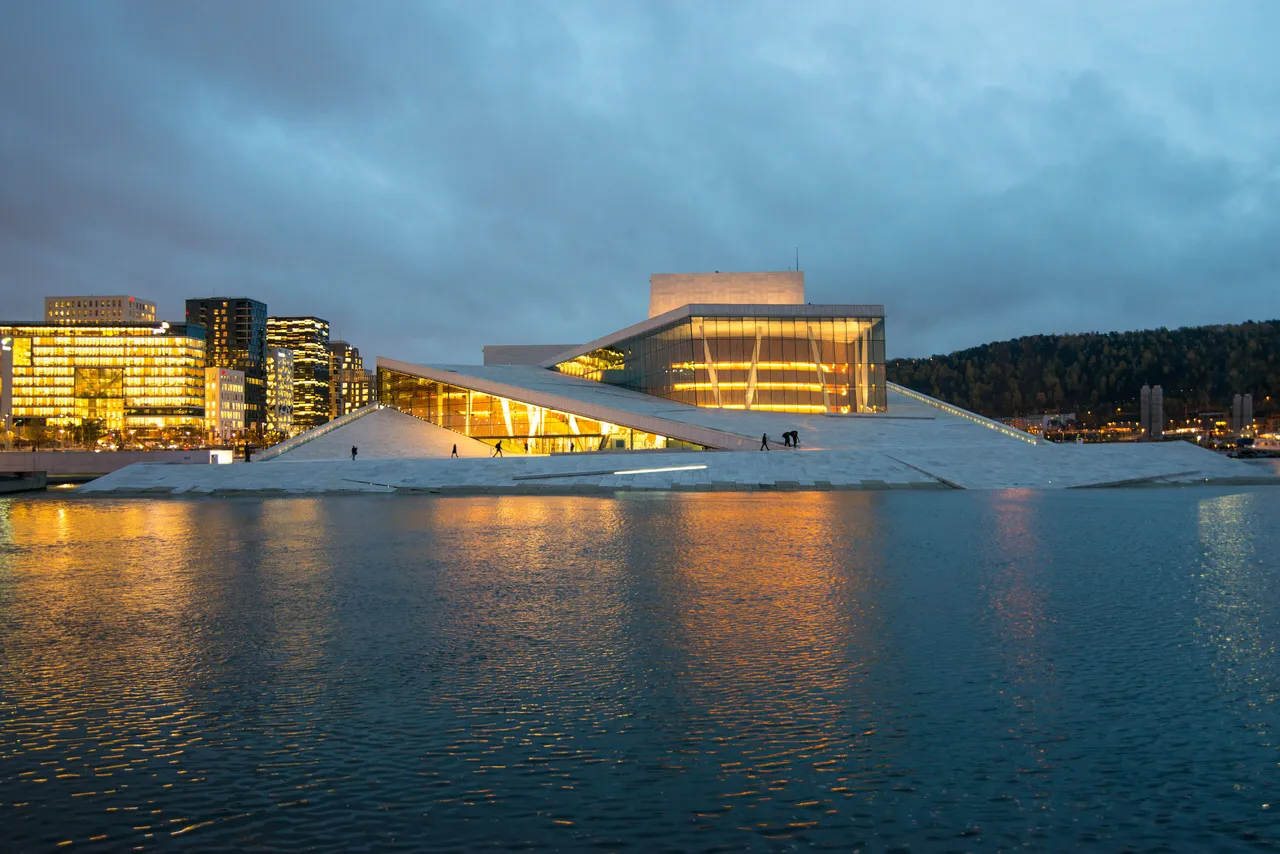
- The Opera House. Snøhetta designed the roof as a public space open to all, so you can walk up the sloping white stone for views over the city and the fjord.
- MUNCH. The 13-floor museum in Bjørvika, about ten minutes’ walk from Oslo S, always has a version of The Scream on display. An adult ticket was NOK 220 when we checked.
- The National Museum. Norway’s largest collection of art, architecture and design.
- Vigeland Park. More than 200 sculptures in granite, bronze and wrought iron by Gustav Vigeland, inside Frogner Park. Entry is free and the park is always open.
- Akershus Fortress. The 700-year-old fortress beside the harbour is free to walk around. Akershus Castle, the Armed Forces Museum and the Norwegian Resistance Museum charge separately.
- Bygdøy. The museum peninsula, reached all year by bus 30. From mid-March to early October (14 March to 4 October in 2026) a ferry also runs from City Hall pier 3 (Rådhusbrygge 3); Ruter tickets aren’t valid on it, so buy a ticket at the pier. It is home to the Norwegian Museum of Cultural History, the Fram Museum (the polar ships Fram and Gjøa), the Kon-Tiki Museum and the Norwegian Maritime Museum. The former Viking Ship Museum is closed and is due to reopen as the Museum of the Viking Age in 2027.
- Holmenkollen. The ski museum sits beneath the ski jump, and the ticket includes the lift to the top of the jump tower, 64 metres above the ground and 427 metres above sea level, with views over the fjord and the Marka.
- The islands. Ruter’s ferries from Aker Brygge serve Hovedøya, Lindøya, Nakholmen, Bleikøya, Gressholmen and Langøyene on an ordinary ticket. Don’t miss the last boat back: there is no regular water taxi service.
.jpg)
Where to stay
- City centre: around Oslo S, Karl Johans gate and the harbour, for short walks to most sights and the airport train.
- Bjørvika and Oslobukta: the modern waterfront by the Opera House and MUNCH.
- Aker Brygge and Tjuvholmen: the western waterfront, with restaurants, bars and the island ferries.
- Grünerløkka: north of the centre, bounded by the Akerselva river, with independent shops, cafés and nightlife.
- Frogner and Majorstuen: quieter residential streets in the west, close to Vigeland Park.
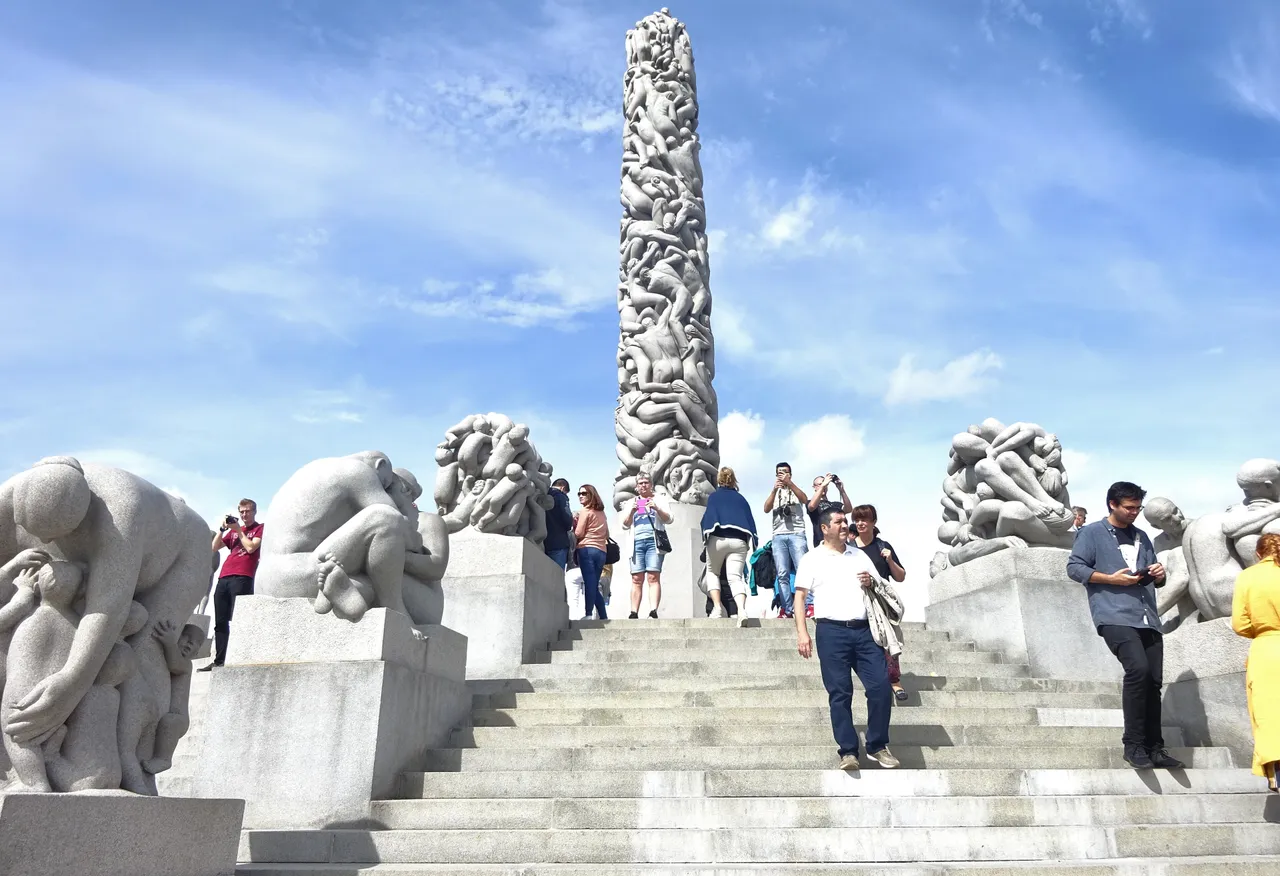
Photo: Paasikivi, CC BY-SA 4.0
.jpg)
Day trips
Fredrikstad lies just over an hour south of Oslo by Vy’s RE 20 train. From the station, free city ferries cross the river to the fortified Old Town.
Good to know
- Pay by card. Cards and phone payments are accepted almost everywhere, but carry a little cash in Norwegian kroner if you plan to pay on a bus or boat.
- The Viking ships. If they are why you are coming, check the Museum of the Viking Age’s opening date first. Until then, Viking Age objects are on show at the Historical Museum in the city centre.
- No drones at Akershus. Drones and open fires are banned on the fortress grounds.
Practical info
- Getting there
- Fly to Oslo Airport, Gardermoen, then take Flytoget (about 20 minutes), a Vy train or Flybussen into the centre. Trains from Bergen, Trondheim, Stockholm and Gothenburg arrive at Oslo S; ferries sail from Kiel, Copenhagen and Frederikshavn.
- Season
- Year-round. Almost 19 hours of daylight at midsummer, under six at midwinter. Spring blossom from late April, the islands in summer, skiing within the city limits in winter.
- Cost level
- high
- Booking tips
- Use the Ruter app and buy tickets before boarding. Work out whether an Oslo Pass pays off for the museums you plan to see. Book restaurants early around 17 May.
Sources
- https://snl.no/Oslo
- https://www.ssb.no/kommunefakta/oslo
- https://www.avinor.no/en/airport/oslo/info/public-transportation/
- https://flytoget.no/en/
- https://torp.no/en/to-and-from/
- https://www.visitoslo.com/en/transport/to-oslo/train/
- https://www.visitoslo.com/transport/to-oslo/ferry
- https://ruter.no/en/about-our-tickets/tourist-ticket
- https://www.visitoslo.com/activities-and-attractions/oslo-pass/whats-included/free-public-transport
- https://www.visitoslo.com/activity/island-hopping-in-the-oslo-fjord
- https://www.timeanddate.com/sun/norway/oslo?month=6
- https://www.timeanddate.com/sun/norway/oslo?month=12
- https://www.visitoslo.com/en/your-oslo/a-guide-to-oslos-seasons/spring/
- https://www.visitoslo.com/your-oslo/winter/urban-joys
- https://www.operaen.no/en/about-us-oslo-operahouse/about-the-oslo-opera-house/
- https://munch.no/en/visit/
- https://www.nasjonalmuseet.no/en/visit/
- https://vigeland.museum.no/en/vigelandpark
- https://vigeland.museum.no/en/news/q-a-frequently-asked-questions
- https://www.forsvarsbygg.no/en/festningene/akershus-fortress
- https://www.visitoslo.com/attraction/bygd-y
- https://nyc.no/bygdoy-ferry/
- https://frammuseum.no/the-museum/plan-your-visit/
- https://www.vikingtidsmuseet.no/english/
- https://holmenkollen.com/en/aktiviteter/hopptarnet/
- https://www.visitoslo.com/en/activities-and-attractions/boroughs/grunerlokka/
- https://www.vy.no/en/inspiration/fredrikstad-day-trip
- https://www.visitnorway.com/places-to-go/eastern-norway/fredrikstad/
- https://www.visitnorway.com/plan-your-trip/travel-tips-a-z/currency-and-prices/