Stavanger
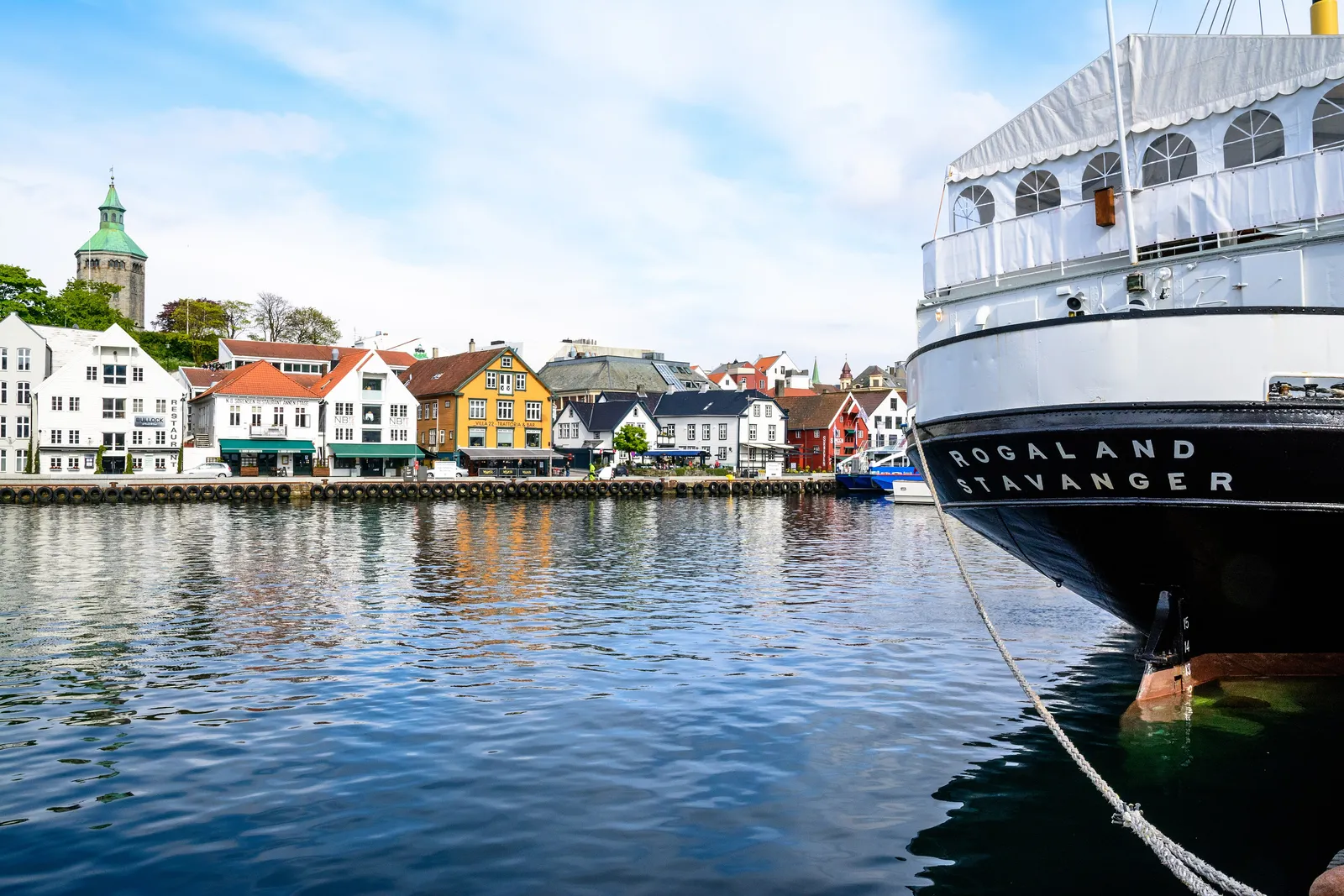
Photo: dconvertini, CC BY-SA 2.0

Stavanger, on Norway’s southwest coast, is the administrative centre of Rogaland county and the country’s fourth-largest municipality, with 151,761 residents in the second quarter of 2026. Together with neighbouring Sandnes it forms Norway’s third-largest urban area. Most travellers come for two things: the compact old centre around the harbour, and the Lysefjord, with Preikestolen (Pulpit Rock), less than an hour away.
The city’s history goes back to the Middle Ages: the cathedral is traditionally dated to 1125, and Stavanger marked its 900th anniversary in 2025. Herring, shipping and canning built the town; since the 1960s it has been the centre of Norway’s oil industry, and Equinor has its headquarters here. Stavanger was a European Capital of Culture in 2008.
Getting there
- By air. Stavanger Airport Sola has direct flights to about 60 destinations. The airport bus (Flybussen) takes about 20–30 minutes to the centre; pay by card or buy online. Kolumbus local bus 42 links the airport with Sola, Forus and Sandnes.
- By train. The Sørlandet Line from Oslo via Kristiansand takes about eight hours. It is run by Go-Ahead Nordic; tickets and timetables are on Entur.
- By ferry. Fjord Line sails daily, year-round, between Bergen and Stavanger (5 hours 30 minutes) and from Hirtshals in Denmark (11 hours 45 minutes), according to its October 2026 timetable.
- By bus. NOR-WAY Bussekspress runs several buses a day from Oslo via Kristiansand (Konkurrenten, about 9 hours 30 minutes) and from Bergen (Kystbussen, about 4 hours 30 minutes to 5 hours 25 minutes).
Getting around
The centre is small enough to explore on foot. For anything further, Kolumbus runs the local buses, boats and city bikes, and its tickets also cover the local Jæren Line trains (Jærbanen).
When we checked in October 2026, an adult single ticket for one zone cost NOK 49, valid for 60 minutes plus 30 minutes for each extra zone. You can’t pay by bank card on the bus: buy tickets in the Kolumbus app (card or Vipps), online, at ticket machines or from selected kiosks and tourist offices. Cash on board costs NOK 20 extra for adults. See Getting around Norway for travel between regions.
When to go
Stavanger has relatively mild winters and rarely sees snow, so the city works year-round. The season you choose matters more for the countryside:
- May to October is the hiking season for Preikestolen. From November to April you need special equipment, and a guide is strongly recommended.
- Mid-May to October or November is when the mountain road to Kjerag is open.
- Summer brings the longest opening hours and the most boat departures to the Lysefjord.
- Gladmat, which bills itself as Norway’s largest food festival, is held in late June; the organisers list 23–26 June for 2027.
Things to see and do
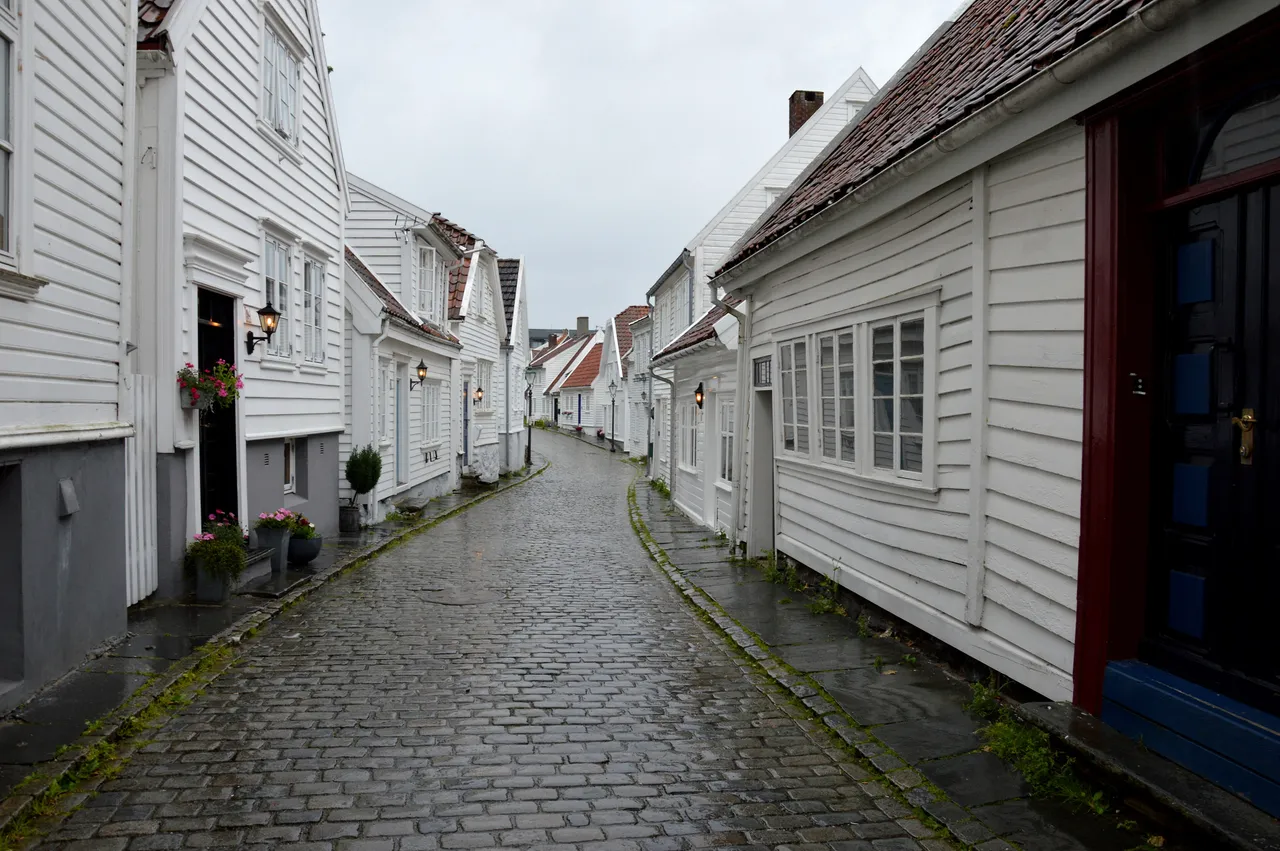
Photo: Olaf Meister, CC BY-SA 4.0

- Old Stavanger (Gamle Stavanger). On the west side of the Vågen harbour, 173 wooden buildings, mostly small white houses from the late 1700s and early 1800s, line cobbled lanes.
- Fargegaten. Øvre Holmegate, the “colour street”, is lined with brightly painted houses, cafés, bars and small shops.
- Stavanger Cathedral. Its Romanesque nave dates from the early 1100s and the Gothic choir from the 1200s. The cathedral has been in continuous use and is far better preserved than Nidaros Cathedral in Trondheim. It was restored for the 2025 anniversary.
- Norwegian Petroleum Museum (Norsk Oljemuseum). On the harbour, in a building shaped like an oil rig. When we checked, it was open daily 10:00–19:00 from June to August and shorter hours the rest of the year, and an adult ticket was NOK 180.
- Museum Stavanger (MUST) runs nine museums, including IDDIS (the Norwegian Canning and Printing Museums) in Old Stavanger, and the Stavanger Museum and Maritime Museum. Hours vary by season and site.
- Valbergtårnet, an old watchtower, gives a view over the centre.
- Street art. The Nuart festival left murals across the city. The organisers paused the festival format in Stavanger in 2022 and had not announced its return when we checked, but the works remain.
- Sverd i fjell (Swords in Rock), a monumental work by Fritz Røed, stands by Hafrsfjord outside the centre.
- Jæren, south of the city, has some of Norway’s longest white sand beaches, and the 41-km Scenic Route Jæren follows the coast.
Stavanger also has several Michelin-starred restaurants. Book well ahead for those.
Where to stay
- The centre, around Vågen and the station, puts you within walking distance of the sights, the airport bus and the boats.
- Sandnes is on the Jæren Line and on the Kolumbus network, if you find better prices there.
- Near the airport at Sola, if you have an early flight.
- By the Preikestolen trailhead, Preikestolen BaseCamp offers cabins and a lodge, so you can start the hike early, ahead of the crowds.
Day trips
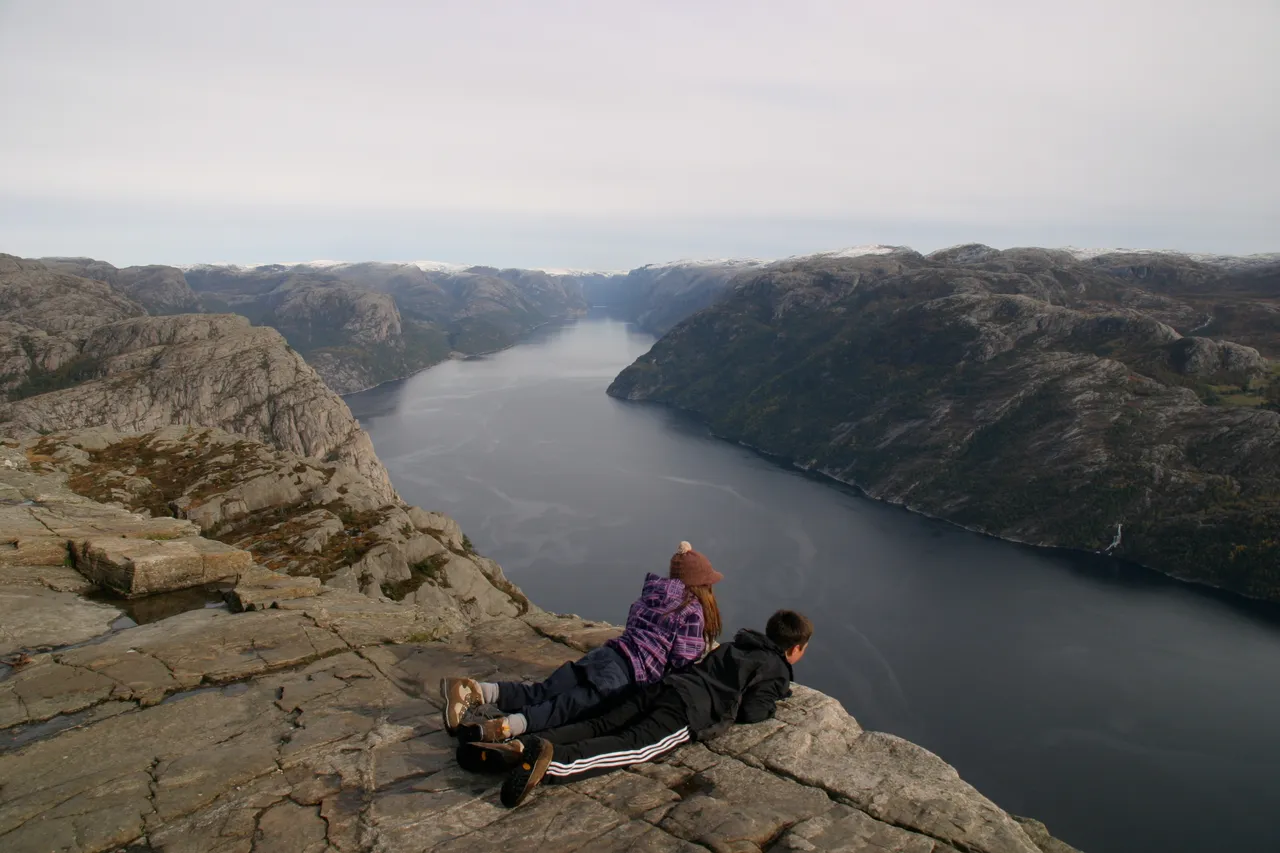
Photo: Max Froumentin, CC BY 2.0
.jpg)
Preikestolen. The flat-topped cliff, about 25 by 25 metres, stands 604 metres above the Lysefjord. The hike is 8 km there and back and takes about four hours. It is graded medium, with steep sections and stone steps, and hikers have to be rescued every year: wear hiking boots, check the forecast and don’t start late in the day.
- Bus: from spring to autumn (most departures from late June to mid-September), Pulpit Rock Tours and GoFjords run buses from Stavanger to the trailhead through the Ryfylke Tunnel, in about 50 minutes. Book online in advance; tickets are valid only with the operator you booked. Year-round, Kolumbus bus 100 goes to Jørpeland, from where you need a taxi.
- Car: take road 13 through the Ryfylke Tunnel to Solbakk, then road 523 through Jørpeland. Parking costs a fee and can fill up between 08:00 and 16:00 on summer weekends.
The Lysefjord by boat. The fjord is 42 km long. Rødne runs a year-round round trip from Strandkaien in the centre, taking 3 to 3.5 hours and passing below Preikestolen and the Hengjanefossen waterfall. From October to March it sails only Thursday to Sunday; in summer there are up to three departures a day. Kolumbus runs a car ferry between Lauvvik and Lysebotn, at the head of the fjord, all year (with a winter timetable), and Rødne adds a tourist car ferry from mid-May to September. Along the fjord, Flørli, a village without road access, is known for its 4,444-step wooden staircase.
Kjerag. A tougher day: about 11 km, 6 to 10 hours and 800 metres of climbing, with sections where you pull yourself up and slide down with the help of wires. In summer an early-morning bus runs from Stavanger to the Øygardstøl trailhead.
A separate hiking guide will cover these routes in more detail.
Good to know
- Weather. Mild doesn’t mean dry. Check the forecast on yr.no before any hike, and turn back if conditions change.
- Winter hiking. Outside May to October, go to Preikestolen with a guide who can provide spikes and other equipment.
- Tickets. Download the Kolumbus app before you arrive; it saves the on-board surcharge.
- Opening hours at museums and boat departures change with the season. Confirm with the operator before you go.
Practical info
- Getting there
- Fly to Stavanger Airport Sola (airport bus about 20–30 minutes to the centre), take the train from Oslo via Kristiansand (about eight hours), or the Fjord Line ferry from Bergen or Hirtshals.
- Season
- Year-round city with mild winters. Preikestolen hiking season May to October; Kjerag from mid-May to October or November; Lysefjord cruises all year, Thursday to Sunday only from October to March.
- Cost level
- high
- Booking tips
- Book Preikestolen buses online in advance, and Michelin-starred restaurants well ahead. Buy local tickets in the Kolumbus app: buses don't take bank cards.
Sources
- https://www.ssb.no/kommunefakta/stavanger
- https://snl.no/Stavanger
- https://snl.no/Stavanger_domkirke
- https://www.visitnorway.com/places-to-go/fjord-norway/the-stavanger-region/
- https://www.visitnorway.com/places-to-go/fjord-norway/the-stavanger-region/weekend-insider-tips/
- https://www.visitnorway.com/places-to-go/fjord-norway/the-stavanger-region/winter-adventure/
- https://www.visitnorway.com/places-to-go/city-break/10000-steps/stavanger/
- https://www.visitnorway.com/plan-your-trip/getting-around/by-train/the-sorland-line/
- https://www.visitnorway.com/places-to-go/fjord-norway/ryfylke/the-lysefjord-area/hiking-to-preikestolen/
- https://www.visitnorway.com/places-to-go/fjord-norway/ryfylke/the-lysefjord-area/hiking-to-kjerag/
- https://www.edgeofnorway.com/en/destinations/stavanger
- https://www.edgeofnorway.com/en/transport
- https://www.edgeofnorway.com/en/destinations/preikestolen
- https://www.edgeofnorway.com/en/destinations/the-lysefjord-in-ryfylke
- https://www.edgeofnorway.com/en/destinations/kjerag
- https://www.avinor.no/en/airport/Stavanger/info/to-and-from-the-airport/
- https://www.kolumbus.no/Billetter/-priser-og-produkter/enkeltbillett/
- https://www.kolumbus.no/Billetter/slik-kjoper-du-billett/betaling-med-kort-og-kontanter/
- https://www.kolumbus.no/Billetter/her-kan-du-kjope-billetter/
- https://www.kolumbus.no/reise/rutetabeller/bat-og-ferje/lysefjorden/
- https://www.florli.no/ferry-lysefjord/
- https://fjordline.com/en/timetable
- https://fjordline.com/en/p/our-ferry-routes/hirtshals-stavanger-bergen
- https://www.nor-way.no/ruter/konkurrenten/
- https://www.nor-way.no/ruter/kystbussen/
- https://preikestolenbasecamp.com/en/planlegg-reisen/
- https://www.fjordnorway.com/en/see-and-do/old-stavanger
- https://www.fjordnorway.com/en/see-and-do/iddis-the-norwegian-printing-museum-and-the-norwegian-canning-museum
- https://preikestolen365.com/how-to-get-to-preikestolen/
- https://rodne.no/en/fjord-experiences/stavanger/fjordcruise-lysefjord-preikestolen/
- https://www.norskolje.museum.no/en/home/visit-the-museum/opening-hours/
- https://www.museumstavanger.no/en/%C3%A5pningstider
- https://www.gladmat.no/
- https://archive.nuartfestival.no/home/nuart-festival-pause.html